


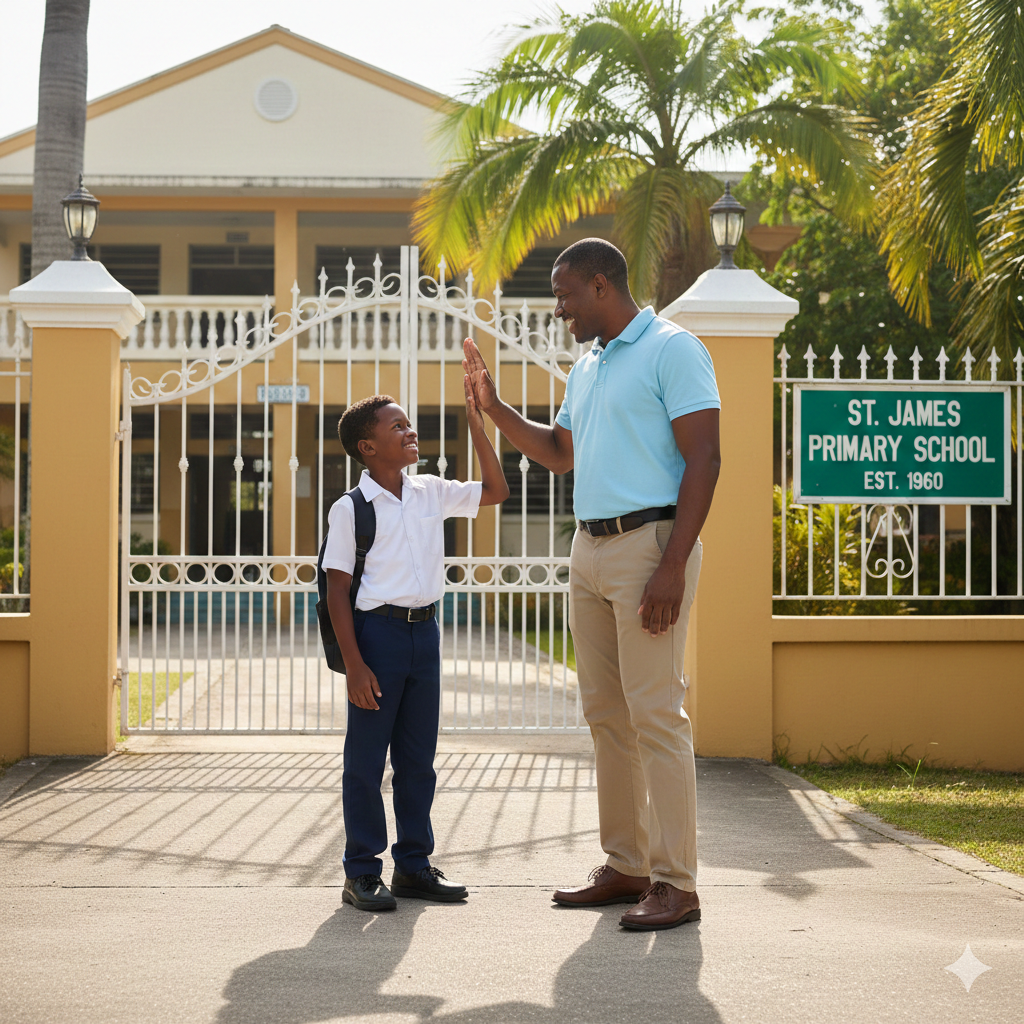
The Secondary Entrance Assessment (SEA) is a significant milestone for every Standard 5 student. While the build-up can feel intense, knowing exactly what to expect on the day can turn anxiety into quiet confidence.
Phase 1: The Morning Preparation
(6:00 AM – 8:00 AM)
The goal of the morning is to protect your child’s peace.
- The Familiar Breakfast: Stick to what they know. Avoid special or "fancy" breakfasts that are out of the ordinary. A heavy or unusual meal can lead to an upset stomach or a sugar crash. Stick to their regular, reliable morning fuel.
- The "No-Revision" Zone: Avoid last-minute cramming. Looking at notes or textbooks on the morning of the exam creates "panic memory" and can actually cause a child to forget what they already know. Trust the work they've done.
- A Moment of Zen: Take time to pray together and listen to some calming music. Whether it's soft lo-fi beats or uplifting songs, keep the household volume low and the energy positive.
- The Early Bird Advantage: Aim to reach the school at least 30–45 minutes early. Rushing creates unnecessary stress hormones (cortisol) that can block clear thinking.
Phase 2: The Exam Checklist (What to Pack)
To avoid morning panic, pack the bag the night before. Students should have:
- The Admission Slip: Your most important document! Ensure it is signed and kept in a clear plastic folder.
- Stationery: At least three sharpened No. 2 (HB) pencils, a clean eraser, and a sharpener with a bin. (Note: Pens are not allowed for the main papers).
- A Simple Watch: To help with time management (smartwatches are strictly prohibited).
- Snacks and Water: A reusable water bottle and a non-messy snack for the break (fruit, crackers, or a small sandwich).
- A Light Jacket: Examination rooms can be chilly due to air conditioning.
Phase 3: The Game Plan
(8:30 AM – 1:00 PM)
The SEA exam is a marathon of the mind. According to the latest Ministry of Education frameworks, the subjects generally follow this sequence:
- English Language Arts Writing (50 minutes): The "Creative Writing" phase where students tackle narrative or report writing.
- Mathematics (75 minutes): Covering Number Sense, Measurement, Geometry, and Statistics.
- The 30-Minute Break: A crucial window to stretch, use the restroom, and have a light snack. Parents: Keep the conversation light during pick-up/breaks; avoid asking about specific questions.
- English Language Arts (75 minutes): The final lap focusing on Spelling, Punctuation, Grammar, and Reading Comprehension.
Phase 4: Pro-Tips for the Big Day
For the Students:
- The "Skip and Return" Rule: If a question looks like a mountain, don't climb it yet. Skip it, do the ones you know, and come back to the tough ones at the end.
- Breathe: If you feel overwhelmed, take three deep breaths. It resets your brain.
- Read Twice, Write Once: Ensure you understand what the question is really asking before you start bubbling or writing.
For the Parents:
- Keep the Vibes Calm: Your child will mirror your energy. Stay "cool, calm, and collected."
- Avoid "Pressure Phrases": Instead of saying "I know you'll pass for your first choice," try "I am so proud of how hard you’ve worked."
- The Post-Exam Detox: Once it’s over, it’s over. Avoid a "post-mortem" of the questions. Let them relax and enjoy their achievement.
Final Thought: SEA is a gateway, not a destination. Remind your child that regardless of the results, their worth is not defined by a score, and a bright future awaits them in secondary school.


Leave a Comment